 +1987 123456
 info@domain.com
 Rock Street, San Francisco
Dance has always been a celebration of human expression — strength, grace, emotion, storytelling. From grand theatre stages to local studios, dancers dedicate years to perfecting technique, musicality, and artistry. Yet behind the spotlight lies a quieter, often uncomfortable truth: beauty standards can influence who is seen, rewarded, and remembered.
In many dance settings, especially competitive or classical environments, there exists an unspoken “ideal” look. Long lines. Certain body proportions. Specific facial features. Uniformity. These aesthetic expectations can become so embedded in the culture that they begin to shape judging decisions, casting choices, and even self-perception among dancers.
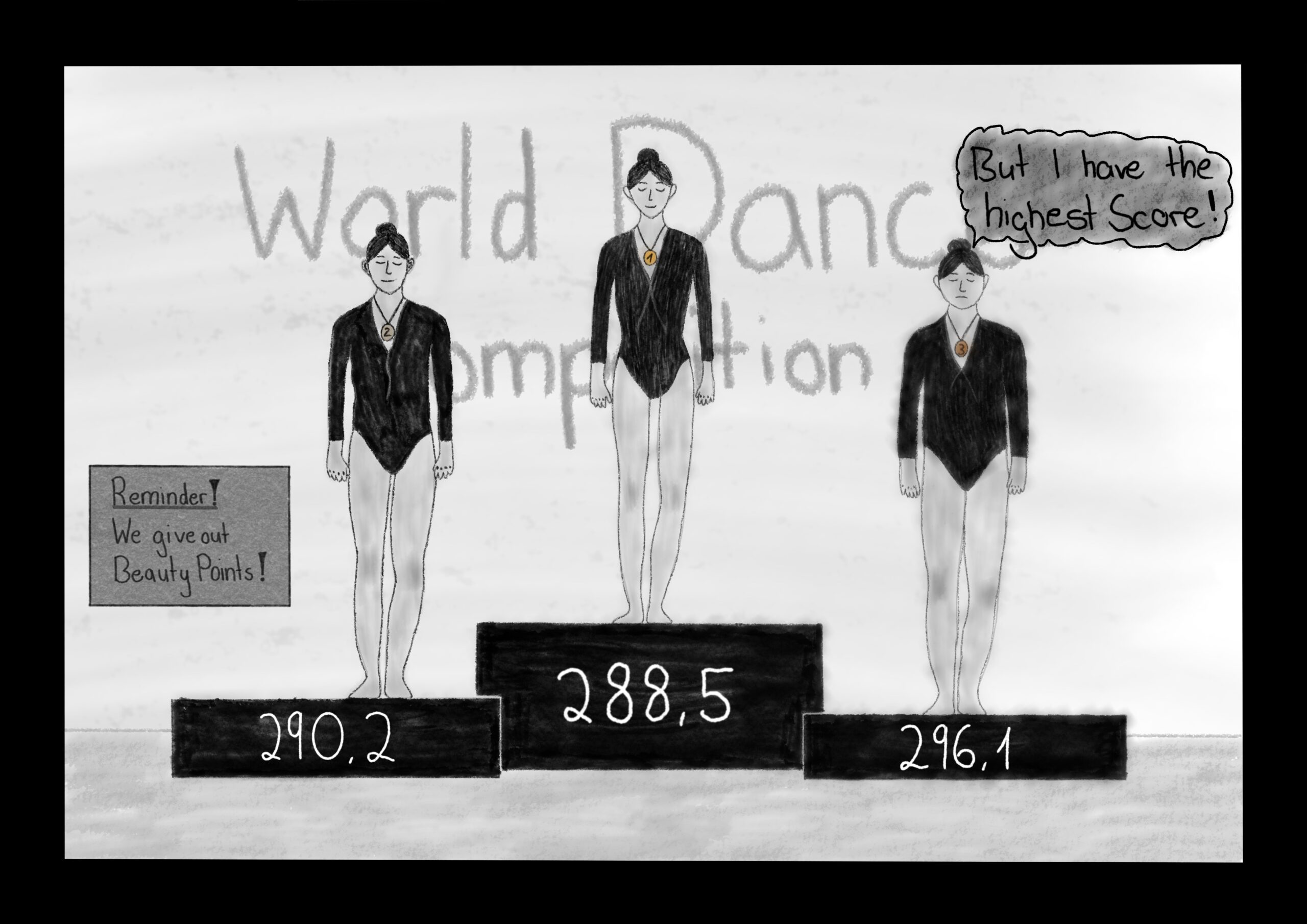
Imagine a competition podium where rankings don’t match raw scores — where additional “beauty points” subtly tip the balance. This scenario reflects a reality many dancers recognize. Performance quality may be measurable, but aesthetic preference is subjective. When these two merge, fairness can blur.
For dancers, the pressure to meet visual standards can start early. Young students may internalize messages about their bodies before they fully understand their artistic potential. Over time, this can lead to comparison, self-doubt, and the belief that success depends not only on skill but also on fitting a mold.
This doesn’t mean beauty has no place in dance. After all, dance is a visual art. Costumes, stage presence, and line quality contribute to the overall experience. The challenge lies in distinguishing artistic aesthetics from restrictive standards that exclude talented performers.
Fortunately, the dance world is evolving. More companies, choreographers, and educators are questioning traditional norms and embracing diversity in body types, backgrounds, and styles. Contemporary audiences increasingly value authenticity, the unique movement quality and emotional truth each dancer brings.
Social media has also played a role. Dancers can now showcase their artistry outside institutional gatekeeping, building communities that celebrate individuality rather than conformity.
Reimagining beauty in dance doesn’t mean abandoning excellence. It means expanding our definition of what excellence looks like. It means recognizing that artistry can live in many forms. Powerful or delicate, tall or compact, symmetrical or unconventional.
When dancers are judged primarily on what they do rather than how closely they resemble an ideal, the art form becomes richer. Stories become more relatable. Movement becomes more honest. And the stage becomes a place where more people can see themselves reflected.
In the end, dance is not just about perfection, it’s about connection. And connection thrives when authenticity is allowed to lead.

Leave a Reply